
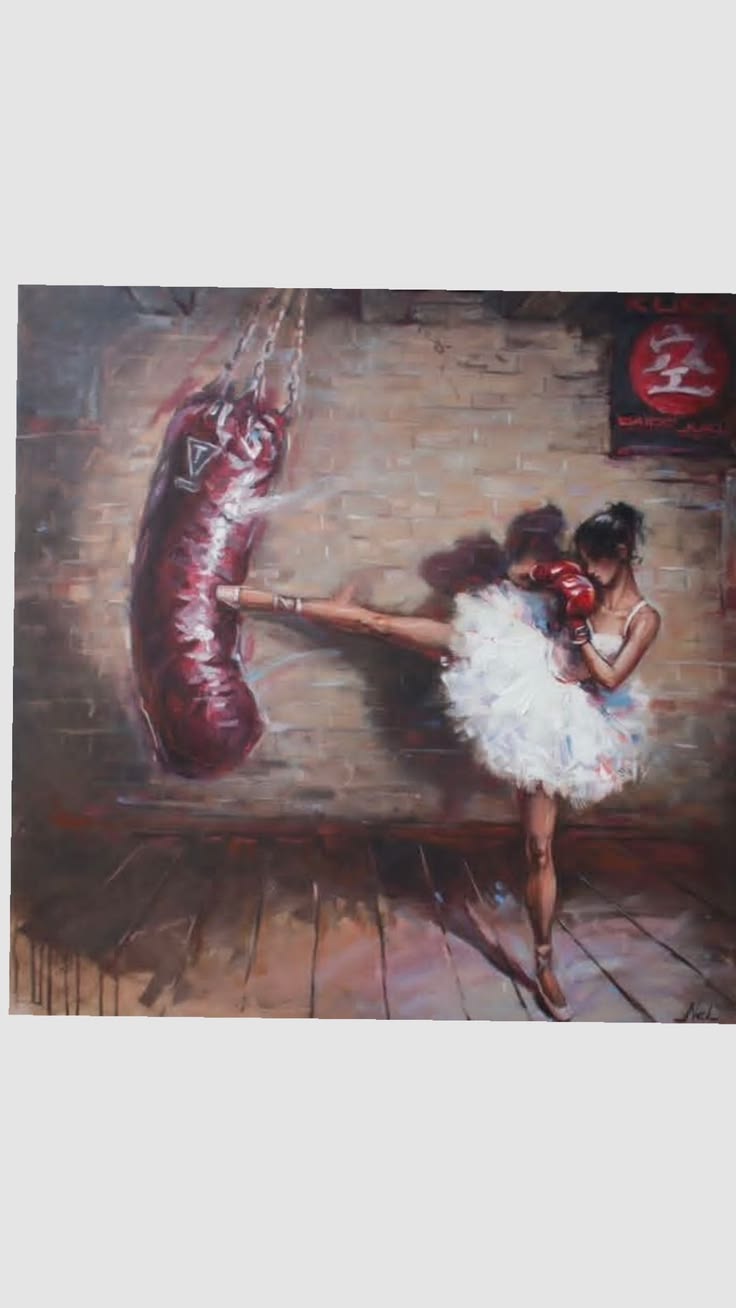
On my way to the office this morning, I was listening in the car to a podcast conversation about conflict: how they arise, how we interpret them and, more importantly, how we choose to deal with them. It was one of those conversations that makes you think long after the podcast has moved on to another topic. Lately, I’ve been thinking quite a lot about my own relationship with conflict. If I’m honest, I’m not particularly good at managing it. In fact, my natural instinct is to avoid it altogether. I don’t like confrontation, I don’t want the tension, I certainly don’t enjoy the emotional aftermath. Conflict takes energy from me. It makes me overthink, replay conversations in my head over and over again, question what was said, what was meant, what I could have said differently and sometimes even question myself. I often find myself wishing things could simply be talked through, understood and resolved without all the emotional weight that seems to come with disagreements. Not to mention the sleepless nights…
But listening to that podcast made me think about something beyond conflict itself: how often conflicts are not necessarily born out of what actually happens, but out of how we perceive what happens. How two people can experience the exact same situation, hear the same words, witness the same actions and walk away with two entirely different interpretations of reality. And maybe that is where something much bigger begins.
We are all biased, perhaps more than we would like to admit. Every day, we interpret the world through our own experiences, expectations, fears, disappointments and beliefs. Our upbringing, our relationships, the people who have hurt us, the people who have loved us, the environments in which we have lived and the experiences we have collected along the way all become part of the filter through which we see everything. We rarely approach a situation as a completely blank page.
Someone who has experienced betrayal might interpret a lack of communication as dishonesty. Someone who has repeatedly felt overlooked might interpret a simple disagreement as rejection. Someone who has learned to protect themselves might see vulnerability as a weakness. And someone who has been surrounded by criticism might struggle to recognise constructive feedback without feeling personally attacked. The same behaviour can trigger completely different reactions depending on the person observing it. We don’t just see the world as it is, we see it through the lens of who we are.
How often do we mistake someone’s silence for indifference, their confidence for arrogance, their directness for hostility, or their kindness for an agenda? How often do we assign intentions to people without ever asking what they actually meant? How often do we allow experiences from our past to determine how we interpret someone who has had absolutely nothing to do with our past? One of the biggest challenges in human relationships is learning to distinguish between what actually happened and the story we created around it. There is a difference between someone saying something we don’t like and someone intentionally trying to hurt us. There is a difference between someone having a different opinion and someone disrespecting ours. There is a difference between being challenged and being attacked. Yet, in the speed of everyday life, we often don’t leave enough room to make those distinctions. We interpret first, react second and ask questions much later, if at all. And sometimes, by the time we realise that we may have misunderstood one another, we have already built walls around a situation that might have required nothing more than an honest conversation.
In a way, we are constantly creating our own reality. Not necessarily the reality of the circumstances around us, because we cannot control everything that happens, but the reality of our experiences. We choose what to notice, what to remember, what to give importance to and what to let go. We decide which behaviours deserve our attention, which comments stay with us, which experiences define our relationships and which ones we allow ourselves to move beyond. Think about how differently two people can describe the same workplace, the same group of friends, the same family or even the same relationship. One person might see a difficult environment filled with people who are constantly competing, another might see a place full of opportunities to learn from different personalities. One might focus on what people lack, while another notices what they bring. One might enter a room wondering who is going to disappoint them, while another enters wondering who they might connect with. Neither perspective necessarily changes the objective circumstances. But it changes the experience of living in them. And over time, those perspectives influence our behaviour. Our behaviour influences how others respond to us. Their responses then reinforce our original beliefs. It becomes a cycle.
If we constantly expect people to disappoint us, we might become guarded, suspicious or distant. Others may respond to that distance, which can reinforce our belief that people are difficult to trust. Equally, if we approach people with openness, genuine curiosity and a willingness to understand, we create more opportunities for meaningful interactions. Not every interaction will be successful, of course, but we at least give it a chance. In that sense, we are not simply observers of the environments we inhabit. We are also participants in creating them. And this brings me to something I genuinely believe in.
I choose to believe that people are good. Not because I think everyone is perfect. Not because I believe everyone has good intentions all the time or because I haven’t experienced disappointment, dishonesty or hurt. I simply believe that every person has something valuable to offer. Sometimes it is a perspective we have never considered. Sometimes it is a lesson we didn’t know we needed. Sometimes it is kindness, humour, knowledge, generosity, creativity or a completely different way of looking at life. Some people enter our lives and stay. Others are there for a particular chapter. Some challenge us, some inspire us, some make us uncomfortable and some teach us things about ourselves that we might otherwise never have discovered. I don’t believe we need to agree with everyone, like everyone or even understand everyone completely to recognise their value. We can disagree without dismissing one another. We can have different values, different opinions and different approaches to life without automatically making one another the enemy.
In this modern world, we have become too quick to categorise people. Good or bad. Right or wrong. Like us or against us. Human beings are considerably more complex than the labels we give them. Being genuinely open-minded means allowing people to be more than our first impression of them. Does this mean we should always see the good and overlook the bad? Absolutely not. Choosing to see the good in people does not mean ignoring red flags, accepting disrespect or compromising our own boundaries. It doesn’t mean making excuses for behaviour that hurts us, nor does it mean giving everyone unlimited access to our lives.
Kindness and boundaries can coexist. Empathy and self-respect can coexist. We can understand why someone behaves in a certain way without accepting that behaviour. I think there is a meaningful difference between protecting ourselves from genuinely harmful behaviour and protecting ourselves from the possibility of being misunderstood, challenged or disappointed. The first is self-respect. The second can sometimes become a limitation. This is something I need to learn about conflict as well. Managing conflict doesn’t mean avoiding it, winning it, proving a point or making everyone agree. Perhaps it means having the courage to stay in a conversation even when it becomes uncomfortable, to listen without immediately preparing a defence, to express how something makes us feel without assuming the other person’s intentions.
Ultimately, I think the way we choose to see the world becomes part of the world we create for ourselves. The way we look at people influences the way we treat them. The way we treat them influences the relationships we build. Those relationships influence our sense of belonging, our happiness and the environments in which we spend our lives. We cannot control other people’s attitudes, intentions or choices. We cannot guarantee that kindness will be returned, that openness will be appreciated or that our efforts to understand someone will always be reciprocated. But we can decide what we want to contribute.
I don’t want to live in a world where suspicion is my default setting, where every disagreement becomes a threat, where I constantly search for hidden meanings or where past disappointments dictate how I approach new people. I don’t want to become so protective of myself that I stop being receptive to others. I want to remain curious. I want to keep learning from people, even those who see life differently. I want to be able to disagree without losing respect, to recognise goodness without being naive and to approach situations with the understanding that there might be more than one version of the story. And I also want to become a little better at embracing uncomfortable conversations rather than spending twice as much energy avoiding them and overthinking them afterwards.
I don’t want my reality to be shaped entirely by my fears, assumptions or previous experiences. I want it to be shaped, at least in part, by the person I consciously choose to be. We don’t get to write every chapter of our lives. We certainly don’t get to choose every person who appears in them or every circumstance we encounter. But we do have a say in the perspective from which we read those chapters, the meaning we give to our experiences and the energy we bring into our interactions. We cannot always choose what the world brings to us. But we can choose what we bring into the world. And I, for one, would rather contribute a little more kindness, understanding and openness than add another layer of judgement to an already complicated world.