
Somewhere between the royal palaces, the Vikings, Andersen’s fairytales, Kierkegaard’s existential crises, a library that looks like a giant black diamond and one surprisingly tiny mermaid, I somehow ended up travelling through several centuries without really leaving the city. Perhaps that shouldn’t surprise me. This is, after all, the city of Hans Christian Andersen, the man who spent his life writing about ugly ducklings, impossible love, little girls with very questionable footwear choices, mermaids who made spectacularly bad romantic decisions and people discovering that what they really wanted was somewhere to belong. So, basically… psychology, but with better costumes.As usual when visiting a new place, I started the day walking through Copenhagen with the slightly unrealistic ambition of seeing “a lot”. Copenhagen is beautiful, compact and extremely walkable, which sounds like a wonderful combination until you realise that everyone else has had exactly the same idea. There were tourists everywhere. People photographing buildings, people photographing themselves photographing buildings, people standing in the middle of the street trying to work out where they were, people taking pictures of food that was going to be eaten approximately seven seconds later. And, of course, bicycles. So many bicycles.
There is an elegance to the city that survives the crowds. Colourful old houses, cobbled streets, canals, royal palaces, quiet courtyards and that particular Scandinavian ability to make even a bin look as if someone designed it for a museum, but underneath all this polished Scandinavian calm is a history that is considerably less calm. Before Copenhagen became a city of bicycles, bakeries and extremely expensive coffee, Denmark was one of the major centres of the Viking world and I love the fact that you can walk around modern Denmark carrying a smartphone and then suddenly remember that this was once the home of people who sailed across Europe, raided kingdoms, traded goods, founded settlements and generally made themselves impossible for half of Europe to ignore.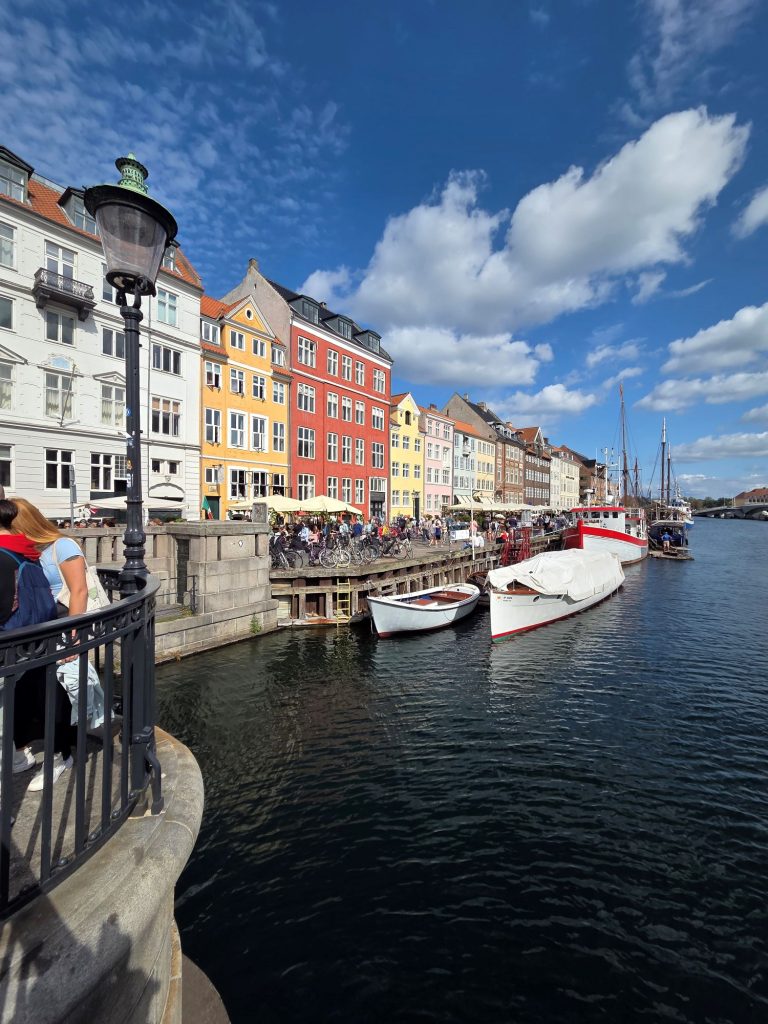 The Danish rulers gradually consolidated power and one of the most important was Harald Bluetooth, who ruled in the 10th century and yes, Bluetooth is the man whose name is now sitting inside almost every phone, laptop, car and pair of wireless headphones on the planet. Harald Bluetooth helped unite Denmark and more than a thousand years later, his name ended up connecting our devices. Literally. The modern Bluetooth logo even combines two Scandinavian runes representing Harald’s initials: H and B.
So somewhere between Viking raids and royal politics, Harald accidentally became the patron saint of people yelling: “Why won’t my headphones connect?!”. I actually find this absolutely magnificent. History has a sense of humour I would say, the Vikings wanted to connect kingdoms, Harald Bluetooth connected Denmark, and now we spend our lives trying to connect earbuds. Progress.
Then there are the royal buildings. Copenhagen has an impressive number of palaces for a country where the modern royal family seems remarkably down-to-earth. And I have to admit, I rather like the Danish approach to royalty. There are palaces, there are guards, there are crowns, there is history, but there is also an almost wonderfully Scandinavian attitude of: Yes, we’re royal, but let’s not make a huge fuss about it. Even the guards seem to have perfected the Danish art of looking extremely serious while everyone around them takes approximately 47 photographs per second.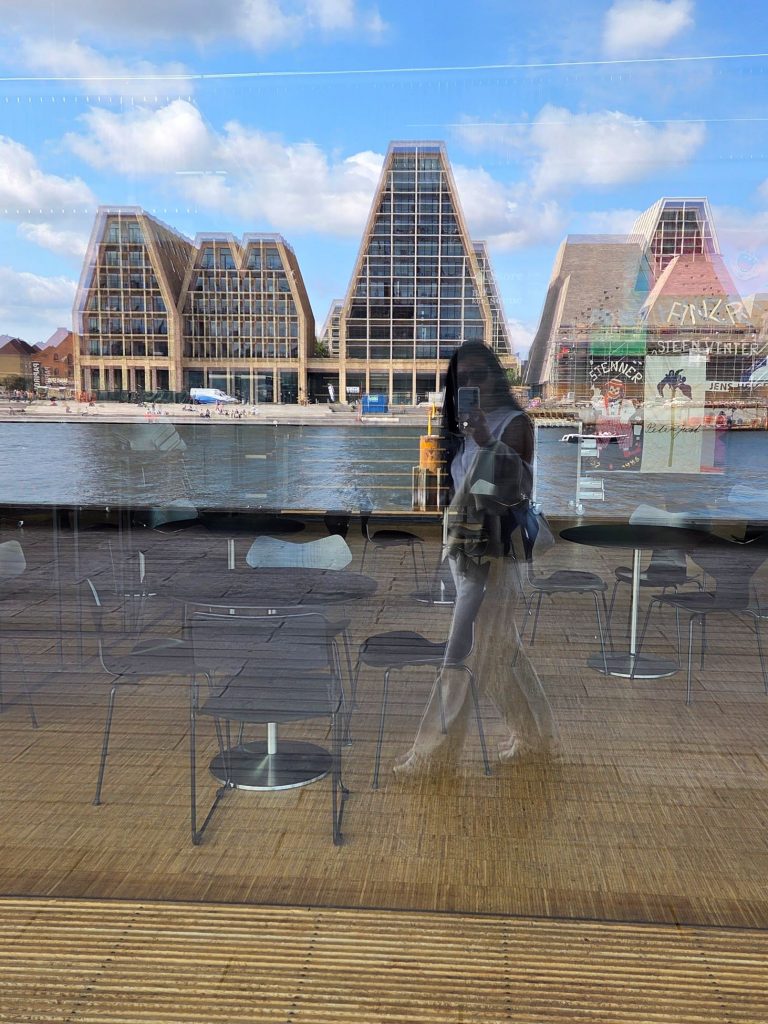 If you are a book lover, you cannot really spend a day in Copenhagen without eventually bumping into his shadow. Hans Christian Andersen spent most of his life here, living in several places around the city, including Nyhavn, where he wrote some of his early fairy tales. Suddenly the city makes more sense, because Andersen wasn’t really writing only children’s stories. He was also writing about rejection, longing, identity, loneliness, love, transformation, disappointment and the eternal human desire to become something more than what life initially told us we were. The ugly duckling wasn’t really about a duck. The mermaid wasn’t really about a mermaid. Perhaps that’s why his stories survived. We grow up. We change. We fall in love. We get disappointed. We reinvent ourselves. Occasionally, like the ugly duckling, we look in the mirror and think: Well… that took longer than expected, which brings me, naturally, to psychology.
Copenhagen also gave us Søren Kierkegaard, philosopher, writer, professional overthinker and frankly, someone who would probably have been extremely good at modern therapy. Kierkegaard was deeply interested in the inner life of human beings: anxiety, choice, despair, identity, faith, relationships and the uncomfortable business of becoming yourself. This feels very Copenhagen somehow. You can apparently spend the morning looking at a royal palace and the afternoon wondering whether you are living authentically. No pressure.
Last visit before a cozy evening, I went to the Black Diamond, the Royal Danish Library’s spectacular modern extension which sits right by the harbour, its enormous dark glass façade reflecting the water and sky. It is one of those buildings that makes you stop and think how very cool this actually is. I loved the symbolism of it. A library, a place filled with centuries of human thoughts, stories, mistakes, discoveries and questions wrapped in black glass, looking out at the water. There was something beautifully Copenhagen about standing there between the old city and the modern world, between Andersen’s fairy tales and Kierkegaard’s existential crises, between Viking history and Bluetooth technology, between royal tradition and contemporary architecture.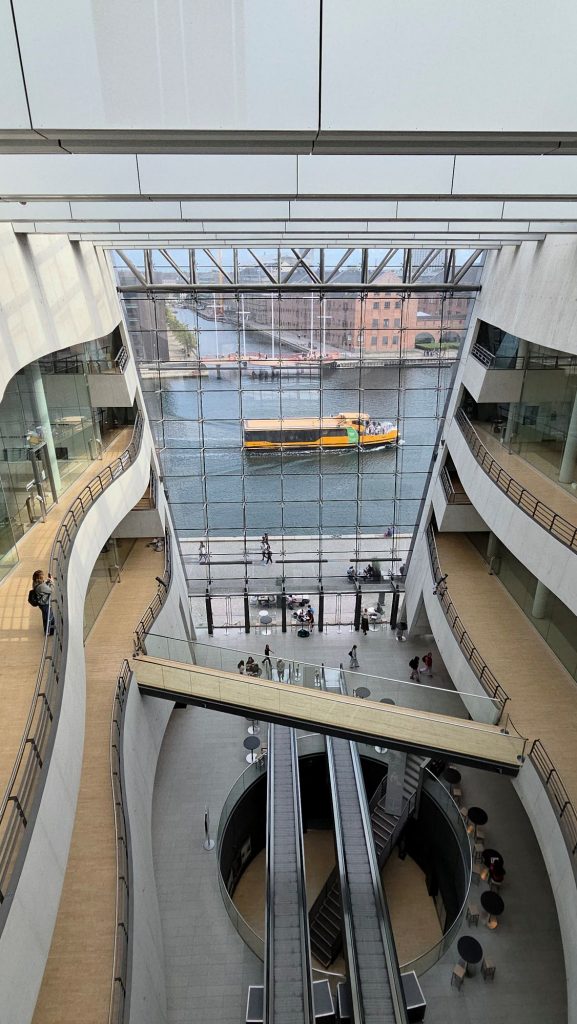 I was strolling through those old streets and somehow the sky kept following me. Oh, the sky! Copenhagen had one of those skies that makes you temporarily forgive the weather for everything it has done to you before. Clouds moving across blue, light changing every few minutes, as if the whole sky was putting on a little show just for me, and lately there is so much blue sky in my life, maybe that’s why I noticed it so much.
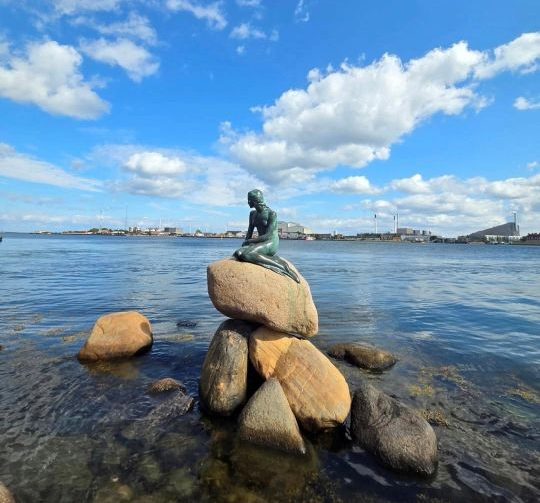
And then, of course, I went to see her, the Little Mermaid. Now, I had been warned, still, expectations are dangerous things because after years of seeing photographs of one of Copenhagen’s most famous landmarks, your imagination builds something enormous and majestic, possibly capable of singing. Reality? She’s tiny. Absolutely tiny. There she sits on her rock, looking calm about the fact that thousands of people have travelled across the world to photograph approximately one metre of bronze.
I stood there thinking about Andersen’s original story, a story about sacrifice, longing and wanting something that may never become yours and suddenly her size felt almost appropriate. Maybe the point was never that she should be enormous, some of the most important things in life are actually quite small: a person, a moment, a decision, a goodbye, a little bit of courage, a tiny mermaid sitting quietly on a rock while an entire tourist industry loses its collective mind around her. Honestly, I respect her for that.
Copenhagen also has a wonderfully strange relationship with tradition. Take hygge, the famous Danish concept usually translated as cosiness, but it is much more about warmth, togetherness, atmosphere and enjoying the good things in life. The Danes apparently decided that instead of solving all of life’s problems, they could simply light a candle and you know what? I’m not completely convinced they’re wrong.
They also have a rather magnificent relationship with their flag, the Dannebrog. According to Danish tradition, the flag fell from the sky during a battle in 1219. Imagine being in a medieval battle and suddenly looking up: “Is that a divine sign?” “No idea, but it has excellent branding.” And the Danes don’t save their flag only for solemn national occasions. It appears at birthdays, celebrations and even on Christmas trees, which is rather lovely. Perhaps that’s another Danish lesson: history doesn’t have to sit in a museum. You can put it on a birthday cake.
By the end of the day, Copenhagen had started to feel like a strange conversation between centuries. Vikings and bicycles. Harald Bluetooth and wireless headphones. Palaces and minimalist furniture. Fairy tales and existential philosophy. Ancient flags and modern architecture. Tourists everywhere and quiet little corners where suddenly nobody seemed to be rushing anywhere. And somewhere between Andersen’s mermaid, Kierkegaard’s questions, the royal palaces, the Black Diamond, the Vikings and that ridiculous number of bicycles, I realised that Copenhagen is less about individual attractions and more about the contrasts. It is a city that seems to say you can be serious and playful. You can carry centuries of history and still reinvent yourself. You can think deeply about the meaning of existence and then stop for a cinnamon pastry. You can have an existential crisis, preferably with candles. You can conquer kingdoms, then invent Bluetooth. You can become one of the world’s most famous fairy-tale writers, then leave behind a story about a tiny mermaid that makes millions of people travel across the world to stare at a bronze statue. And maybe that is the most Danish thing of all.
Life doesn’t need to be perfectly understood to be beautifully lived. Sometimes you just need a good sky, a little bit of history, somewhere interesting to walk to, someone worth sharing it with and slightly lower expectations for the size of the mermaid.