
Falling in love is often described as something magical. This is already suspicious, I would say. Because if anything else in life came with that many disclaimers, loss of appetite, loss of sleep, sudden irrational optimism, voluntary vulnerability, we would label it a side effect and immediately consult a doctor. And yet, people keep signing up for it. Willingly and repeatedly. Sometimes even enthusiastically.
At the beginning, falling in love feels like a personality upgrade you did not authorize. Suddenly, music sounds better, coffee tastes deeper, clouds are fluffier, ordinary days develop a 50s movie filter. Even your own thoughts become slightly dramatic, as if narrated by someone who definitely charges extra for emotional depth.
You meet someone and your brain immediately says: “This is interesting, I want it.” Your nervous system, however, screams: “ABORT MISSION OR PREPARE FOR CONSEQUENCES” and then proceeds to do absolutely nothing useful. Why? Because falling in love does not consult logic, it is not a committee decision. It is more like a spontaneous internal software update that no one read the terms and conditions for. One minute you are a rational adult managing your life, the next, you are rereading a message for the 11th time, trying to decode whether a full stop means emotional distance or just grammar.
Modern love is especially confusing because we now have technology to accelerate delusion. In earlier times, you had to wait days for uncertainty. Now you can experience five emotional spirals in under three minutes because someone saw your message but didn’t reply yet. It is efficient. Also brutal. It is very on-brand for humanity.
But beneath all the comedy of overthinking and subtle emotional chaos, something real is happening. Falling in love is one of the few experiences that temporarily overrides self-protection. People who normally need a plan suddenly say, “Let’s see what happens.” People who trust no one suddenly start saying, “They seem different.” People who said they were “too busy” suddenly have time to think about someone at 2:17 a.m. for no reason that would hold up in court.
There is also the physical aspect, which is rarely discussed honestly enough. Your body knows before your mind agrees. Heart rate slightly confused, sleep pattern disrupted, appetite negotiable, focus… somewhere else entirely. It is as if your internal systems are collectively saying: “We are not sure what this is, but we will be prioritizing it for the foreseeable future.”
And then comes the real plot twist: the emotional negotiations. Because falling in love is never just “I like you.” Noooo, it is: “I like you… but also I have a history”, “I like you… but I have learned things”, “I like you… but I have seen what happens when people don’t mean what they say”. So love becomes a strange mixture of openness and caution. A handshake between hope and experience. A constant internal debate between: “Let’s go all in” and “Let’s not lose our sanity ever again”.
Still, despite all the warnings, the hesitations, the emotional spreadsheets and imaginary risk assessments, something remarkable keeps happening: People fall in love anyway. Not because they are naive, not because they forgot, but because, against all reasonable evidence, the human system is still wired for connection, for laughter shared at inappropriate times and naughty jokes, for someone knowing your silence without requiring translation, for the small, ordinary moments that somehow feel like they matter more than they should. And maybe that is the real joke of it all.
One of the most confusing parts is how quickly curiosity appears, not just emotional curiosity, but deeply physical curiosity too. Suddenly, the mind starts asking questions it did not previously schedule: “What would it feel like to be close to this person in a way that is not conversational?”, “What happens when the space between two people disappears for a moment?”, “Why does a simple glance suddenly feel like it has energy?” And somewhere in that same mental landscape, there is the very human curiosity about closeness itself, about kissing, about touch, about what it means when two people move from “you exist over there” to “you exist here, close enough to change my breathing pattern.”
It is not always dramatic. Sometimes it is just quiet confusion. A thought that arrives uninvited: “Oh, so this is what my body was talking about”. And then, almost immediately, the internal conflict begins. Because the mind, ever responsible, says: “Let’s take this slowly. Let’s be rational. Let’s not lose control of anything important like dignity, emotional stability, or sleep”, while the rest of the system, the hormonal department, clearly operating without supervision, responds with: “Absolutely not. We are accelerating”.
It is a full internal disagreement. One part drafting careful plans, the other part rewriting the entire emotional forecast and the body, unfortunately, does not care about consensus. Heart rate becomes slightly less cooperative, attention becomes selective, presence of the other person starts to feel oddly magnetic, like gravity has quietly increased in one direction only. Even simple things, such as standing close, brushing hands, a pause that lasts half a second too long, suddenly feel like events with subtext. And yet, beneath all this biochemical mischief, there is something surprisingly tender happening. A deep desire not just for attraction, but for connection, for the strange comfort of being seen so clearly that even silence feels shared. Still, the comedy of it all is impossible to ignore.
Because while one part of the brain is trying to conduct a careful emotional risk assessment, another part is fully invested in imagining what it would feel like if all that distance simply… disappeared for a moment, or multiple moments one after the other. And somehow, both parts are active at the same time.
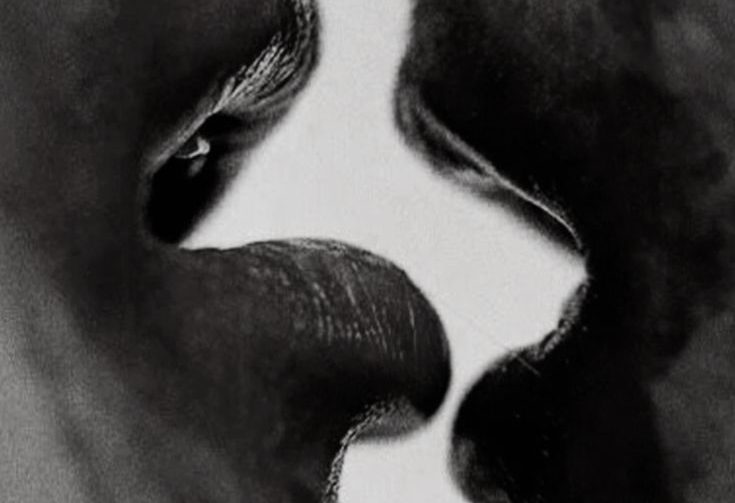
The first kiss does not arrive like a moment. It arrives like a shift in gravity. One second there is space, ordinary, familiar, filled with all the small background noises of being two people standing near each other and trying to behave like nothing significant is happening, and then suddenly, there isn’t. It starts before it starts: in the pause that becomes too long to be casual, in the way the eyes stop looking for words, in the quiet recognition that something has already changed its mind on both sides. And then, almost without permission, there is closeness, inevitable in a way that no one officially agreed to, but both somehow understood.
The world does not disappear. It simply loses importance. Sound becomes softer at the edges. Time loses its neat structure. Everything external steps back politely, as if it knows it is no longer the main event. And then the kiss happens. Not as a performance, not as a decision, but as a question that stops pretending it needs an answer. And the strange thing is how gentle confusion can feel in that moment. The mind, always eager to comment, tries briefly to say something like: “Are we sure about this?”, but it is already too late for commentary, because the body has moved first and it speaks a language the mind is still learning to translate.
There is warmth, yes, but not just warmth. There is a sudden awareness of another presence so close it stops being “other” in the way distance usually defines it. There is also hesitation, woven inside it. Not doubt exactly, but awareness. The awareness that something important is being crossed without a map, after midnight. And yet, it does not feel like falling. It feels like arriving somewhere your system had quietly been preparing for without informing you.
Time behaves strangely. It stretches and collapses at once. Seconds feel both precise and irrelevant. Everything is happening in detail, but also as a single impression you will not be able to fully reconstruct later. And then there is no return. The small separation that is not really separation, because nothing has gone back to how it was before. Eyes meet differently now, breathing is slightly less obedient, the space between becomes charged with something new, not loud or dramatic, but undeniably present.
And in that aftermath, the most unexpected thing appears: a kind of soft astonishment, as if both people have just discovered that the world contains an additional setting no one mentioned earlier. The mind, finally catching up, tries to categorize what just happened. The body does not care for categories, it simply remembers and keeps pulsing. And somewhere between those two, between understanding and sensation, there is a quiet realization: Some moments do not change everything loudly. They change everything quietly enough that you only notice later… when you realize you are no longer the same person who stood there a few seconds before.
Falling in love is not a loss of control. It is the repeated, slightly chaotic decision to risk being fully human in front of another human… and hoping they don’t run away when they see the unedited version, which, statistically speaking, is a bold strategy. Emotionally speaking, it is probably the only one worth anything at all.
Fluffy & Lovey-Dovey